Hiring an offshore WordPress developer: how to do it safely, from someone on the other side
I am a WordPress developer in Lahore, and most of my clients are in other countries. Here is how to hire an offshore developer without the horror stories: what to check, how to protect your site and code, and how to make the time difference work for you.
I am a WordPress developer based in Lahore, Pakistan, and most of my work is for clients in other countries, including the US. So I have seen offshore hiring from the developer’s side for years, and I have also cleaned up after a few arrangements that went badly.
Hiring offshore can work very well. It can also go wrong in predictable ways. Almost all of them are avoidable with a few simple habits. Here is what I would tell a friend who was about to hire someone like me.
Why people hire offshore, and what to expect
The obvious reason is cost. Experienced developers in countries like Pakistan, India or the Philippines often charge considerably less than local agencies.
The less obvious reason is time. Lahore is nine hours ahead of US Eastern time in summer and ten in winter. Send a request at the end of your day and it can be done by the time you start the next one.
What to expect in return: you will manage the relationship a bit more deliberately. Written instructions matter more, and you should plan for less real-time back and forth.
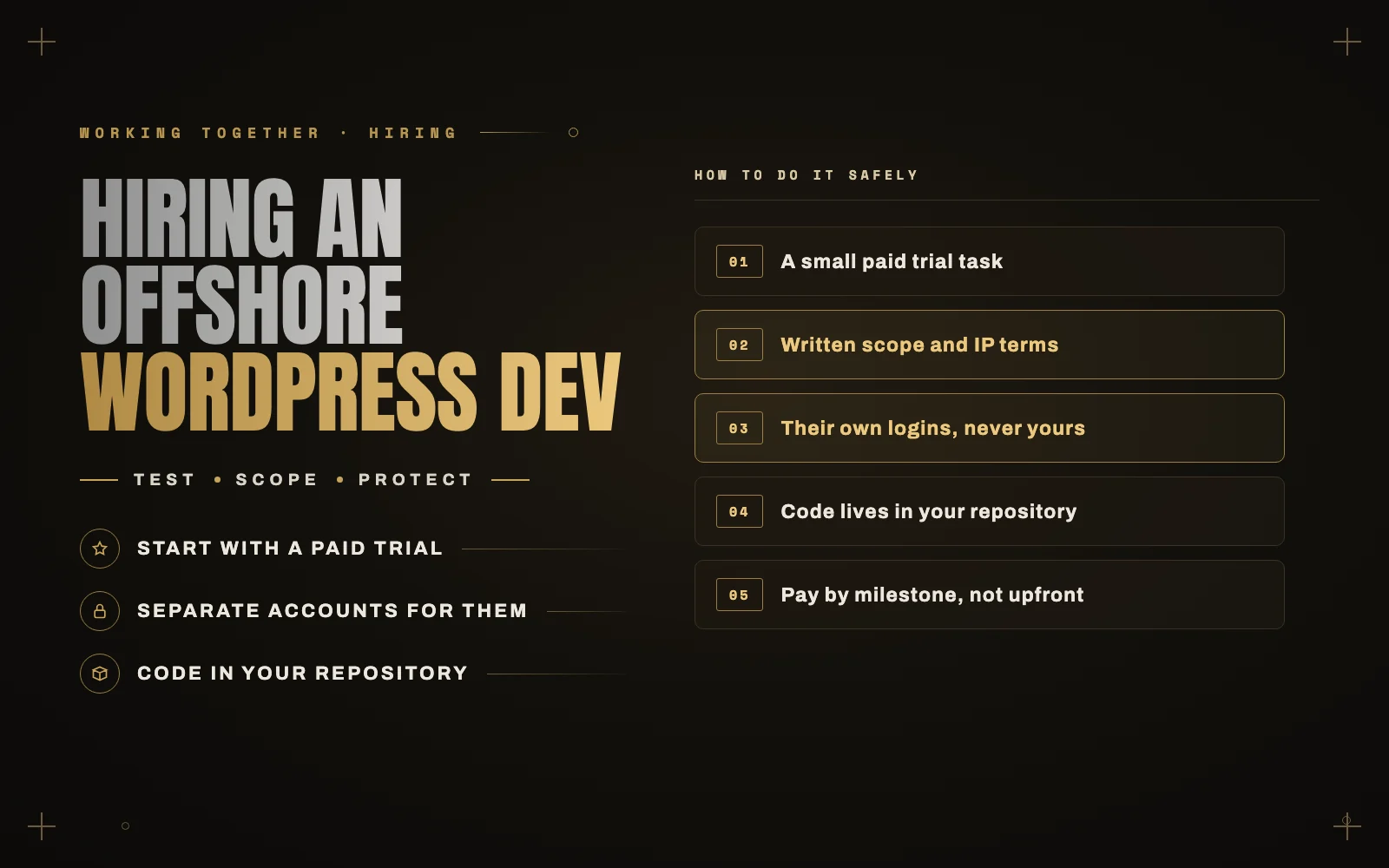
Start with a small paid trial
A portfolio shows what someone can do with unlimited time. A trial shows how they actually work with you.
Pick a real, small, self-contained task: fix a layout bug on mobile, build one section, speed up one page. Pay for it at their normal rate. Then look at more than the result:
- Did they ask sensible questions before starting?
- Did they tell you how long it would take, and was that accurate?
- Did they explain what they changed, in plain words?
- Did they test it on mobile without being asked?
A developer who communicates well on a small task will communicate well on a big one. The reverse is also true.
Put the scope and ownership in writing
Before any real project starts, agree in writing on:
- What is being built, in enough detail that you could both point to it later.
- What it costs, and how changes to the scope are priced.
- Who owns the work. You should own the code, design and content you pay for, and the agreement should say so.
- Confidentiality, if the developer will see customer data or private business information.
This does not need to be a long legal document. A clear written scope and a short agreement covering ownership and confidentiality prevent most disputes before they start.
Never share your own logins
This is the one I feel strongest about.
Do not give a developer your own WordPress admin password, your hosting password or your email login. Instead:
- Create a separate account for them in WordPress, with the role they need.
- Give them their own SFTP or hosting access if they need it, rather than your main account. Many hosts support extra users.
- Use a staging site for development, so changes are tested before they reach the live site.
- Remove their access when the work is done, or keep it active only while you are working together.
Separate accounts mean you can see who did what, and you can remove access in one click without changing every password you own.
Keep the code in your own repository
For anything beyond small fixes, custom code should live in a Git repository that you own, on GitHub, GitLab or Bitbucket, with the developer added as a collaborator.
That way you always have the full history of the code, and if the relationship ends, the next developer can pick up exactly where the last one left off. A site whose only copy of the custom code is on someone’s laptop is a risk.
Pay by milestone, not all upfront
For projects, split payment into milestones tied to work you can see: a design approved, a staging site ready, the site launched. A small deposit to start is normal and fair. Paying the full amount before anything is delivered is not necessary.
For payments, developers in Pakistan commonly use services like Payoneer or Wise, or a direct bank transfer. Agree on the currency and who covers the transfer fees upfront.
Make the time difference work for you
The time zone gap is a feature if you plan for it:
- Agree on a short daily overlap, even an hour, for calls and quick questions. For US clients, my evening overlaps with your morning.
- Write requests the night before. Clear written requests with screenshots get done while you sleep.
- Ask for an end-of-day update with what was done, what is next and anything that needs your decision.
Red flags
- They want full admin access to everything before scoping the work.
- They cannot explain what they changed, or avoid putting things in writing.
- They promise a large site in a few days for a very low fixed price.
- They are hard to reach until an invoice is due.
- They refuse a small paid trial.
Hire for communication first and skill second. A skilled developer you cannot communicate with will still cost you money.
Work with me
If you are looking for a WordPress, WooCommerce or Shopify developer who works well with clients across time zones, see my services or get in touch. I am happy to start with a small paid task so you can judge for yourself, and I read and reply to every inquiry personally within one business day.
Keep reading
 Working Together
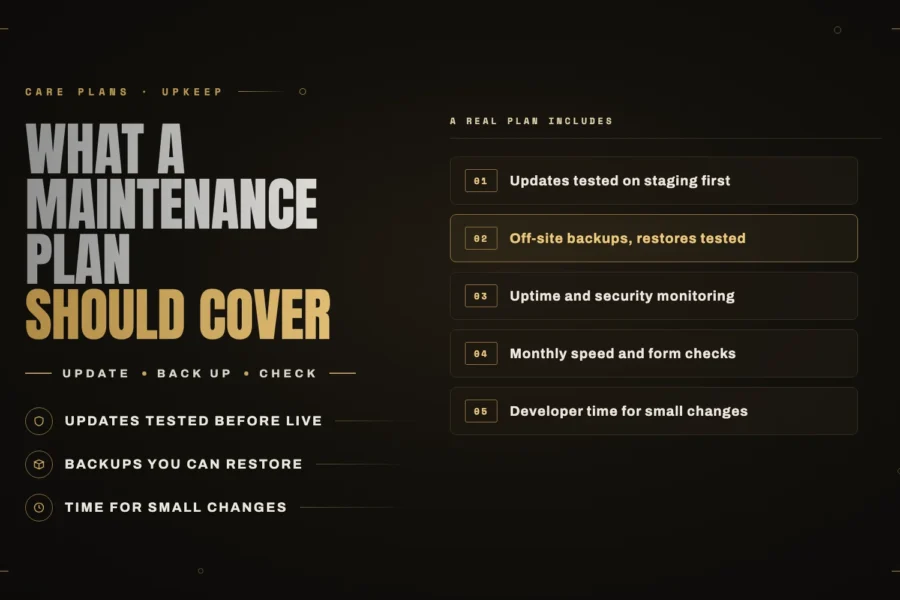
What a WordPress maintenance plan should include, and what it should cost
Most WordPress care plans promise updates, backups and security. The difference between a good one and a useless one is in the… Read article ↗ Working Together